Why Use Blackened Baking Pans?
In professional baking, externally blackened pans can influence several important aspects of the baking process:
Faster heat absorption
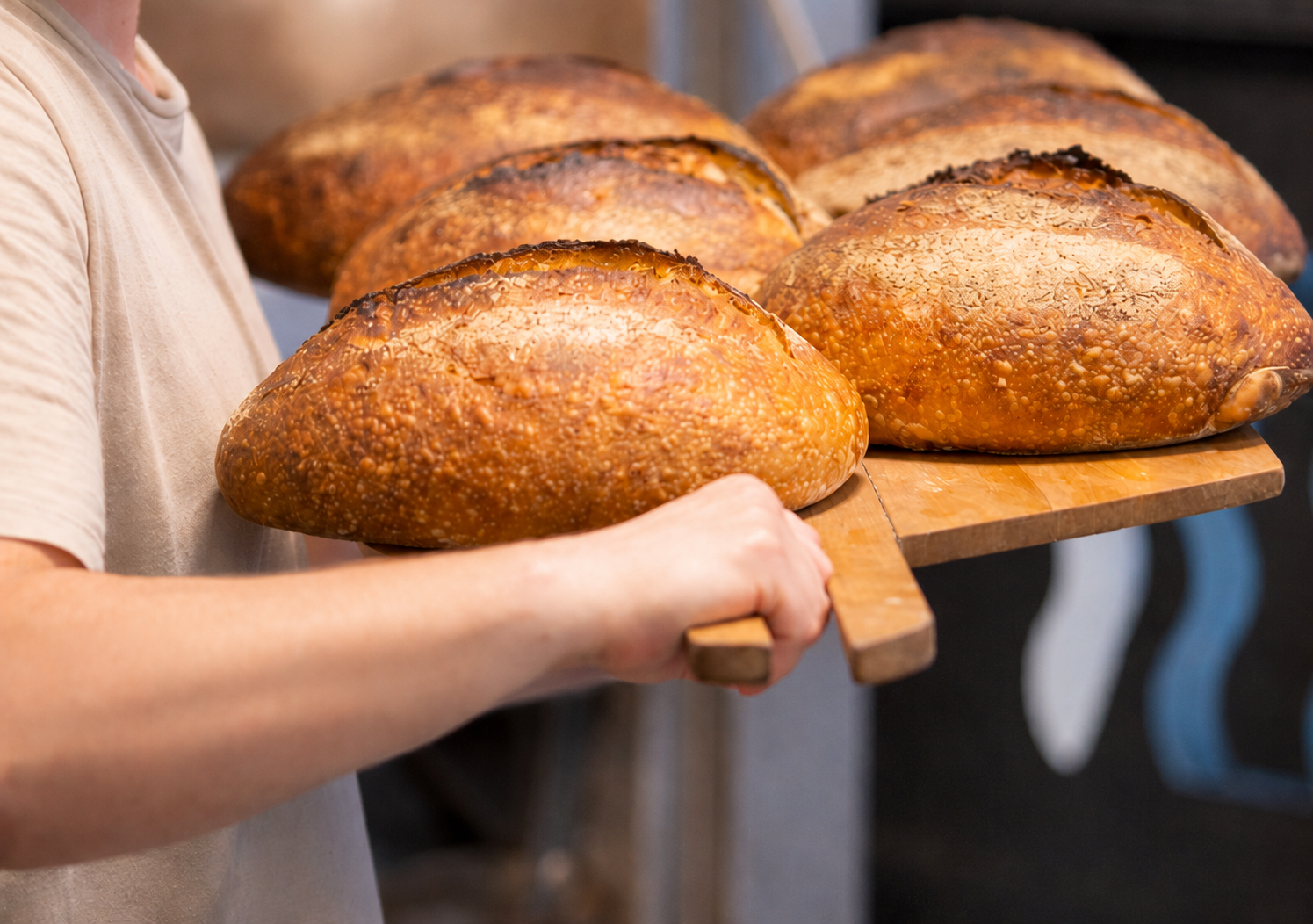
Dark surfaces absorb thermal energy more efficiently, allowing the pan to heat up faster. As a result, bread crust develops colour more quickly and can achieve a deeper bake.
Potential process optimization
In many cases, blackened pans allow bakers to shorten baking times or lower oven temperatures. However, this always requires proper adjustment of production parameters depending on the pan material and construction.
Longer-lasting appearance
Blackened surfaces tend to maintain their visual appearance longer and are also commonly used in display and presentation elements
What Does “Blackening” Actually Mean?
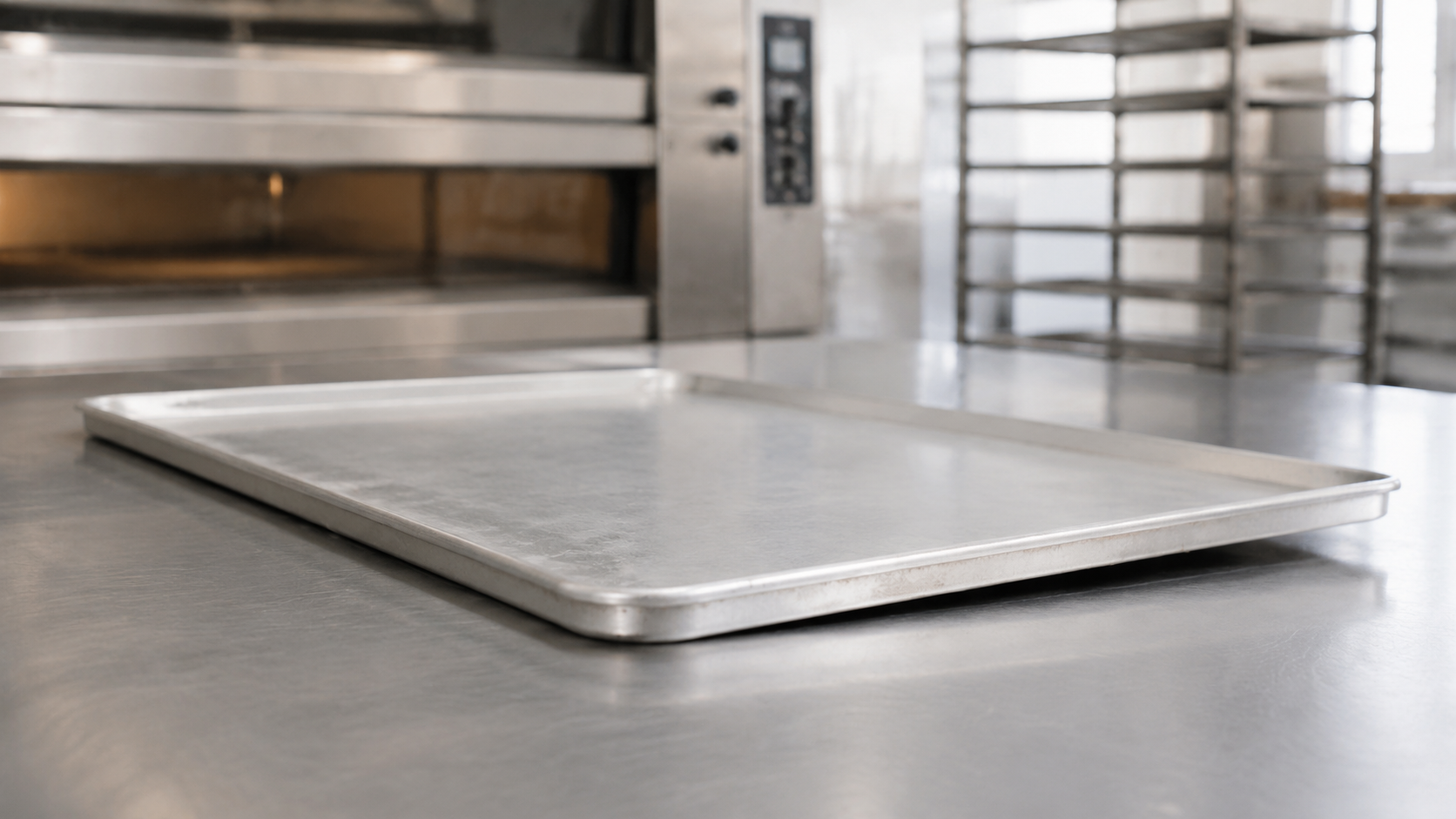
In the baking industry, the term “blackening” is often used very broadly. In reality, it can refer to different surface-finishing methods for baking pans and moulds.
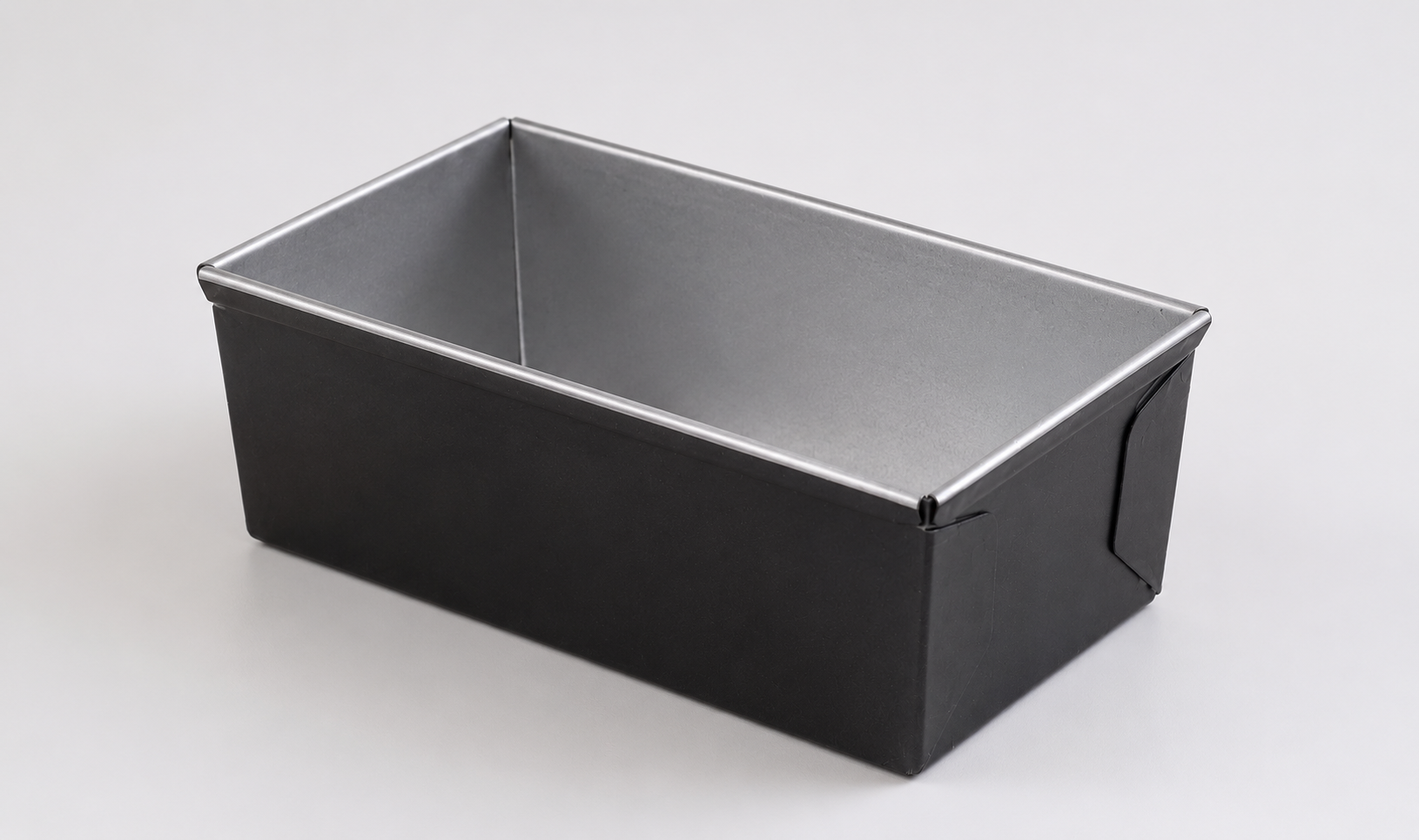
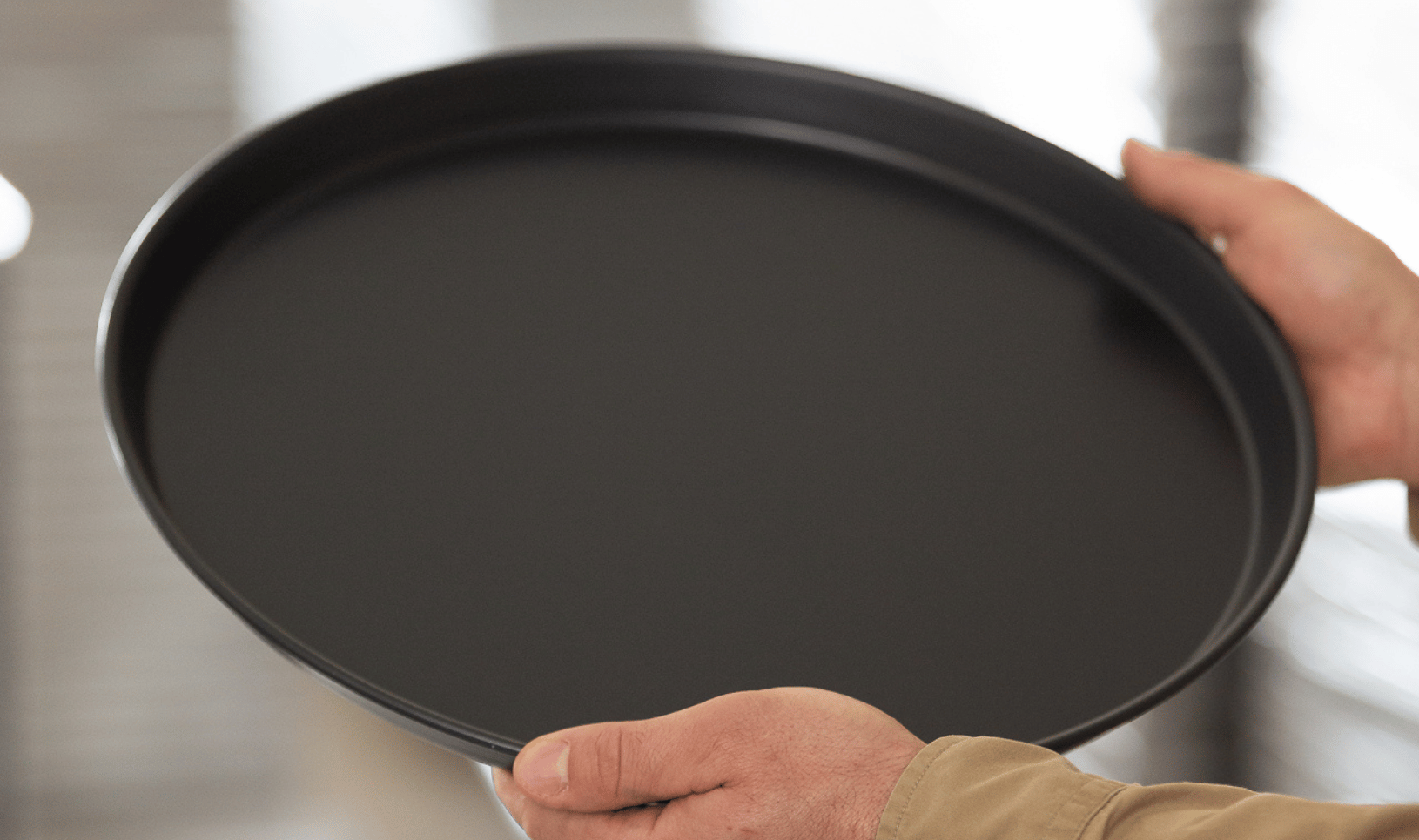
For baking pans, it most commonly refers to external black coating applied to the outside of the pan. This may result in faster and more intense crust colouring during baking and can influence both crust development and baking parameters.
It is important to note that black anodized aluminium is primarily used for display trays and presentation elements — not for standard baking pans operating directly inside the baking process.
How Does Blackening Affect Baking? — Test Results & Observations
Comparative tests on baking pans show that external black coating has a measurable impact on bread baking performance.
With externally black-coated pans:
- crust colour develops faster,
- baking becomes more intense,
- and the pan absorbs heat more efficiently.
In practice, this often means:
- shortening baking time,
- or lowering oven temperature.
At the same time, the final effect strongly depends on the pan material itself.
Aluminium
Aluminium pans provide even colour development on all sides and the bottom of the loaf. In black-coated versions, the crust becomes more intensely baked, which is why reducing baking time or lowering oven temperature is usually recommended.
Acid-resistant stainless steel
With stainless steel, baking characteristics may differ from aluminium and aluminized steel. Tests often show lighter loaf sides with a more baked bottom crust. Black-coated versions increase crust intensity, although they do not always improve baking uniformity.
Aluminized steel (AluSteel)
Aluminized steel pans provide highly even baking results. Black-coated versions offer stronger crust colouring and faster heat-up times. Especially in stamped pan designs, reducing baking time or lowering oven temperature is often recommended.
Safety & Documentation
Every pan or mould intended for food contact should have proper documentation confirming safe use.
Before purchasing, it is worth checking:
- whether the manufacturer provides up-to-date certifications,
- whether the surface is approved for food contact,
- what the recommended cleaning and maintenance procedures are,
- and whether operating instructions are included.
For externally coated pans, coating durability and resistance to bakery working conditions are equally important.
Maintenance — How to Care for Blackened Pans
Even high-quality coatings require proper care.
Stainless steel
Avoid cleaners containing chlorides or aggressive bleaching agents. Mild detergents and warm water are recommended.
Aluminium & aluminized steel
Overly aggressive chemicals may accelerate surface wear and reduce the durability of the external coating.
Good practice
- Always dry pans thoroughly after washing,
- avoid leaving moisture on surfaces,
- and follow the manufacturer’s recommended drying temperatures.
What Should You Check Before Buying?
Before purchase
- Does the manufacturer clearly specify the surface-finishing technology?
- Is the pan designed for intensive bakery production?
- Does the manufacturer provide recommendations for baking temperature and baking time?
- Does the product include valid certifications and documentation?
After delivery
- Is the coating colour and finish uniform?
- Are there any chips, stains or coating imperfections?
- Did the manufacturer provide cleaning and operating instructions?
- Will the pan require adjustments to existing baking parameters?
Summary
Blackening baking pans is not simply about appearance — it is a functional element that affects baking performance and oven operation.
Tests show that blackened pans can absorb heat faster and intensify crust colouring, which often requires adjustments to production parameters. At the same time, the final baking effect depends heavily on both the material and the pan construction itself.
That’s why it’s important to work with a manufacturer who understands your specific production process and can recommend the right solution for your products.
In professional bakery production, what matters most is not the colour of the pan itself, but how it performs under real baking conditions.