The Engineering Behind a Crispy Crust
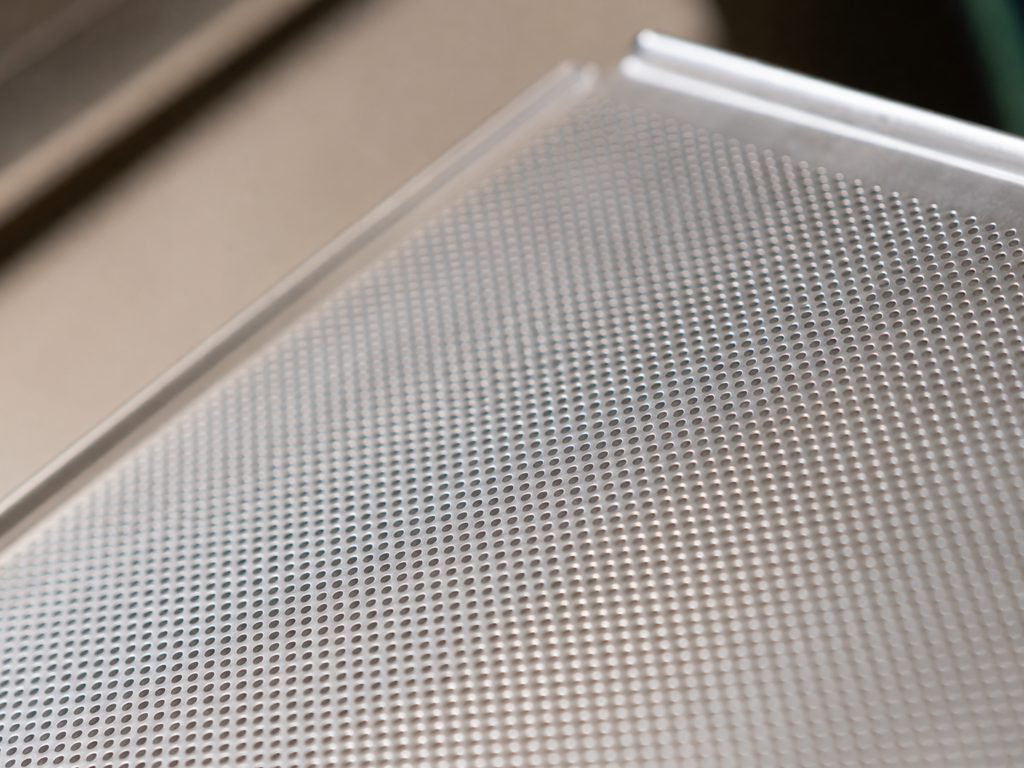
Perforation isn’t a design feature—it’s an engineering solution. Its purpose is to solve one of the biggest challenges in baking: how to deliver heat quickly and evenly to the bottom of the product while allowing excess moisture to escape.
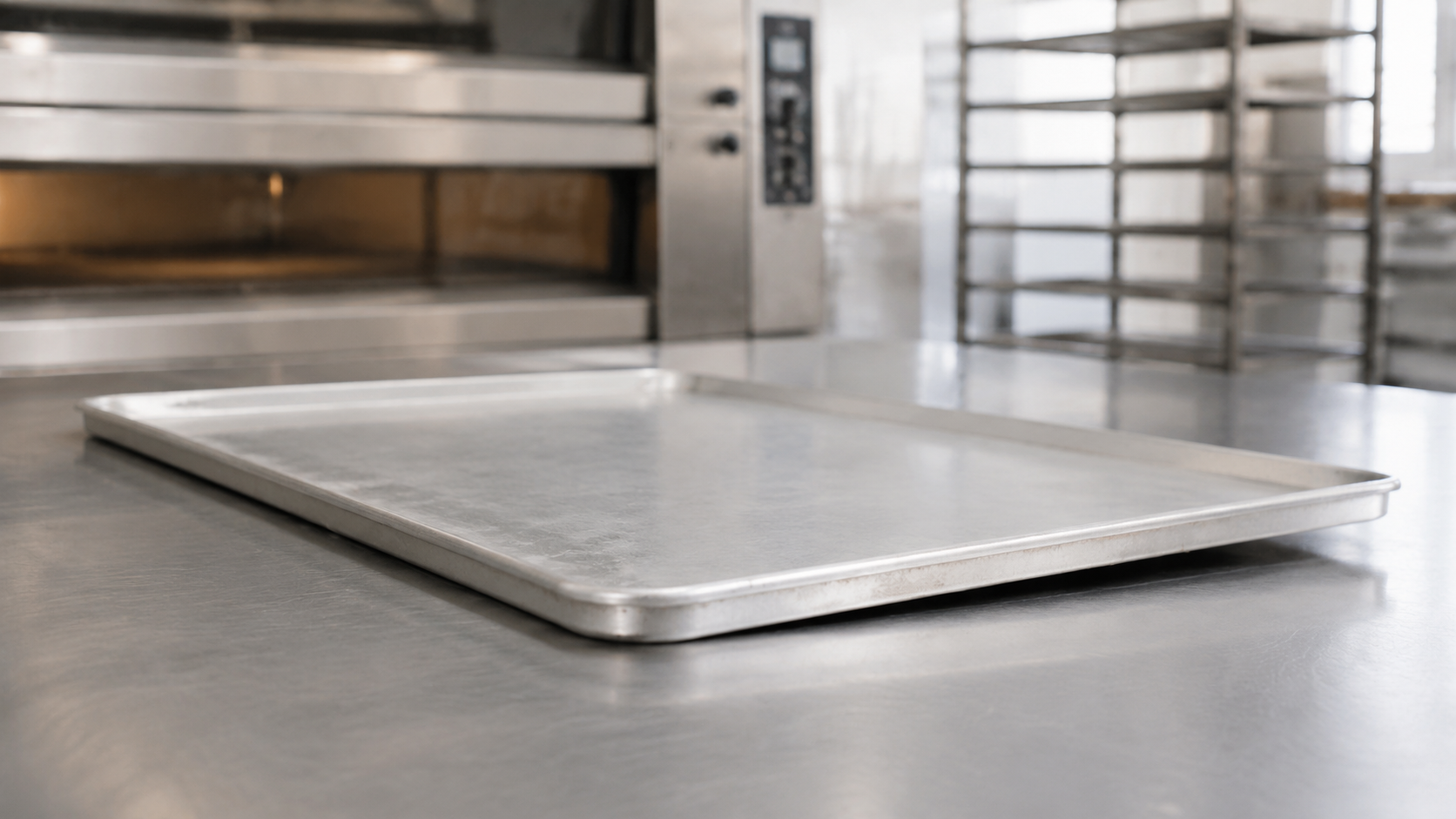
With solid baking trays, heat is transferred primarily through direct contact between the metal and the dough. While this method is effective, steam released during baking often becomes trapped underneath the product. Instead of producing a crisp crust, this retained moisture can soften the base.
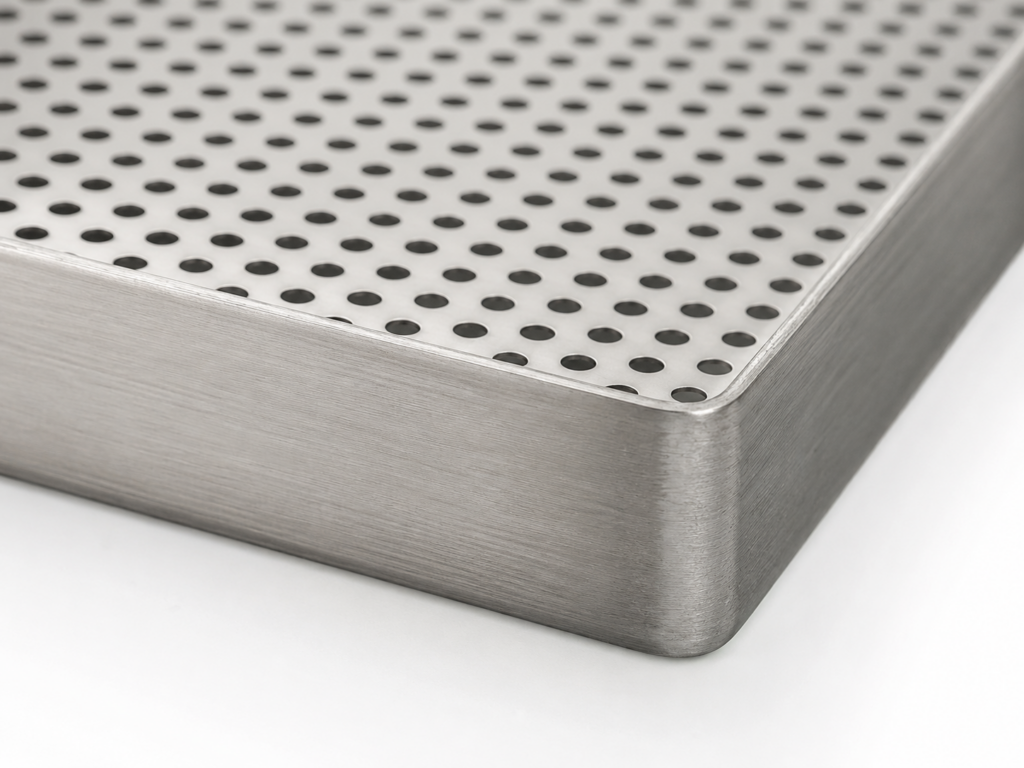
Perforated trays change the dynamics entirely. The holes allow hot air to circulate freely beneath the dough while providing an escape route for steam. The result is a more even bake, improved bottom coloration, and the crisp texture that customers associate with premium-quality bread.
Sometimes, the smallest design details have the greatest impact on the final product.
Choosing the Right Perforation Size
Not all perforations perform the same way. The diameter of each hole influences airflow and heat circulation, making it important to match the perforation to the type of product being baked.
- 1.8 mm perforation
Perfect for baguette rolls and delicate bakery products. Smaller holes create a gentle airflow while supporting the structure of thinner doughs.
- 3 mm perforation
The most versatile and widely used option. Suitable for a broad range of bread, rolls, and yeast-based products, it offers an excellent balance between airflow and stability.
- 5 mm perforation
Designed for products that require stronger heat circulation and a thicker, crispier crust. Larger holes increase airflow beneath the product, promoting deeper browning and improved crust development.
It’s worth remembering that larger perforations are not always the better choice. When baking delicate pastries or confectionery items, oversized holes may leave visible impressions on the finished product. Selecting the appropriate perforation should always depend on the characteristics of the product—not simply on preferenc.
Material Matters Just as Much
Perforation alone cannot deliver optimal baking performance. The material of the tray plays an equally important role.
- Aluminium
Aluminium has long been a popular choice in bakeries thanks to its excellent thermal conductivity. It heats up quickly, transfers heat efficiently, and represents an economical solution for many operations. However, under intensive use and prolonged exposure to temperatures above approximately 280°C (536°F), aluminium trays may become more susceptible to deformation.
- AluSteel
For bakeries operating under demanding production conditions, Magorex developed AluSteel—a steel core coated on both sides with aluminium.
This unique combination brings together the strengths of both materials:
- exceptional resistance to high temperatures,
- outstanding durability,
- excellent heat conductivity,
- longer service life,
- improved dimensional stability during intensive daily production.
For professional bakeries, durability isn’t simply about replacing trays less often—it means greater consistency, fewer interruptions, and lower long-term operating costs.
Is Non-Stick Coating a Good Match?
Absolutely. Combining perforation with a high-quality non-stick coating offers the best of both worlds. While perforation optimizes heat circulation and crust development, the coating minimizes sticking and reduces the need for release agents or additional greasing. This improves production efficiency while making cleaning and handling significantly easier.
Like any professional equipment, non-stick trays require proper care. Avoiding metal tools and aggressive cleaning chemicals helps preserve the coating for much longer.
At Magorex, we also offer non-stick coating regeneration, allowing many baking trays to receive a second life instead of being replaced prematurely—reducing both costs and waste.
When Are Solid Baking Trays the Better Choice?
As specialists in professional bakery equipment, we don’t believe there is a universal solution for every application. Solid baking trays remain the preferred option for products such as sponge cakes and certain pastry items where retaining moisture in the base is desirable.
Choosing the right tray isn’t about following trends—it’s about selecting the right tool for the specific product you produce
A Small Detail That Makes a Big Difference
Perforation is only one part of a much larger baking system. On its own, it won’t guarantee perfect results. But when combined with the right material, appropriate construction, and a quality non-stick coating, it becomes an important factor that directly contributes to better baking performance and more consistent results.
For professional bakeries focused on quality, every detail matters—including the ones that are easy to overlook.
Need Help Choosing the Right Baking Trays? Not sure which baking trays are best suited to your production?
Our specialists will be happy to analyse your baking process and recommend solutions tailored to your products, production volumes, and operational requirements. Contact the Magorex team today and discover how the right baking trays can improve the quality, consistency, and efficiency of your bakery.
This article was prepared by the Magorex team, a manufacturer of professional equipment for bakeries and pastry shops. Discover more solutions designed to support modern baking professionals at www.magorex.pl.